“We’ve got exclusive access to JSBX’s new album, scheduled for release next spring! And what’s more, it’s produced by Steve Jordan, the NYC-based drummer known for his work on Keith Richards’ solo albums and Tamio Okuda’s albums! And what’s more, it’s a garage-infused, heartbreaking album with a crystal-clear sound, truly authentic rock! So, ahead of our interview with the new album, we’re holding a JSBX history class! And of course, the lecturer will be the band themselves!
Today, I’d like to take a quick look back at the history of the Jon Spencer Blues Explosion (hereafter referred to as JSBX).
“OK. I get it, I’ll try it.”
First of all, in a previous interview you said, “Blues is the root of everything when it comes to music. Rock, soul, funk, disco…so I think Blues Explosion is a great band name.”
“Yeah, I think it’s a really great band name (laughs).”
So, when you formed JSBX, what were the points you placed the most importance on, and what points did you think had to be carefully eliminated?
“Probably what I wanted to get rid of more than anything was all the boring stuff, the ordinary stuff, the everyday stuff. The main thing was… when I started the Blues Explosion, the main idea was, ‘Let’s do something special, let’s do something crazy.’ Yeah, something exciting.”
So what is the main reason you chose the art form of rock and roll?
“No, it’s not that… I don’t know if I chose it or they chose me. It just happened… Rock and roll just brought meaning to my life. It helped shape my life.
It gave me something to live for. And it sounded like me.”
So, from the following list of rock ‘n’ rollers and bluesmen, could you choose five who have had the greatest influence on shaping you as an artist, and tell us what kind of influence they were? First of all, Carl Perkins… (*Apparently, the point didn’t go through, so he answered about all of them).
“Carl Perkins (laughs)? Yes, Carl Perkins is one of the all-time greats of rockabilly. Not only is he an incredible guitarist, but I think he’s also a great singer. He’s also a great songwriter. I’ve been greatly influenced by the records he recorded. What’s interesting about Carl Perkins is that he has continued to have an influence throughout rock and roll. For example, if you listen to the Beatles, you’re influenced by his guitar style, right? The same goes for a lot of other people. Throughout the history of rock and roll.”
So, Little Richard.
“Maybe he’s the king, or rather the queen, of rock and roll (laughs). He has an incredible character, and all I can do is admire his greatness. Because Little Richard is… the ultimate. The ultimate.”
Jerry Lee Lewis.
“Another giant, God (laughs). Yeah, Bruce Exploit
Jerry Lee Lewis was a huge influence on me when I started Rosé. He’s just… a mind-blowingly thrilling song stylist and an extraordinary character.”
Gene Vincent.
“Yeah, things are getting a little weird here (laughs). I think all the people I’ve just mentioned are weird, but Gene Vincent was even… even more dangerous. He always wore black leather, had a leg injury from a motorcycle accident, and made music that was incredibly perverted and sexual. I was really influenced by him (laughs).”
So I’ll just say the rest in one go: Willie Dixon, John Lee Hooker, Hound Dog Taylor, Elvis Presley.
“Elvis Presley is also a rockabilly great. Of course, it’s different from the early rockabilly, but I enjoyed his later, more sophisticated, pop recordings and was influenced by them. Elvis Presley was also an extraordinary character, and to some extent he defined rock ‘n’ roll, as something that allowed you to reinvent yourself. You could become whoever you wanted to be. Willie Dixon is just a fantastic songwriter. John Lee Hooker is the coolest guy. He’s the originator of the great boogie, that groove. And Hound Dog Taylor and I was really influenced by the early Blues Explosion band, the Houserockers. Of course they were great, they rocked live, and it was real blues music, but the structure was the same, you know? Two guitars and a drum kit. So they were particularly inspiring.”
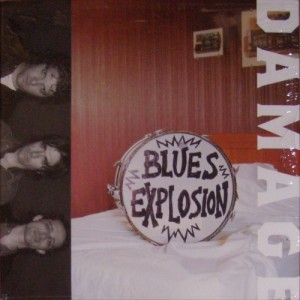
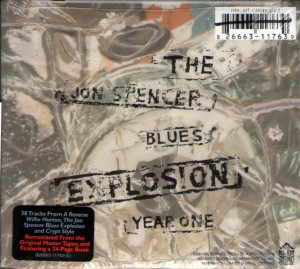
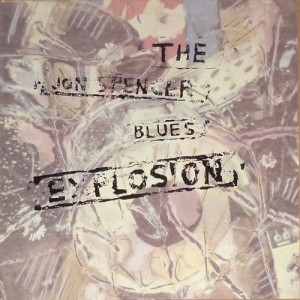
So, JSBX has two debut albums: “JON SPENCER BLUES EXPLOSION” released by Caroline and “Crypt Style” released by Burn Holmes. Why did you decide to produce two debut albums that overlap in content?
“We were just so excited, we just wanted to put out some records… We had a creative explosion, we were so excited, that’s all.”
The JSBX sound at the time was directly influenced by rockabilly. What sounds were your biggest inspirations at the time?
“Yes, I was influenced by rockabilly. Of course, there was the style, but the energy and spirit was just huge. It wasn’t just the musical form. Of course, it wasn’t just rockabilly; it was a mix of free jazz, no wave, punk rock, and many other styles. But rockabilly was really energetic music.”
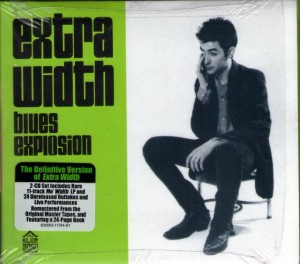
On their second album, “Extra Width,” the funk and soul influences become even stronger. What were the main internal and external factors that prompted this change in songwriting? “Yeah, it was a big shift when we started working on “Extra Width.” We were really influenced by the artists at Stax. Otis Redding, Rufus Thomas, Carla Thomas, Sam and Dave, Booker T. and the MGs… Yeah, the Stax sound was a huge influence. The Meters were also big. And on top of that, we had Ice Cube, Public Enemy, Dr. Dre…
There was music like that. Rap music at the time
A lot of them were Meters and Stax artists.
It samples old soul music.
Yeah, it wasn’t for any internal reasons, but because of the music we listened to at the time.
I think that kind of music is big.”
Soul, funk, disco, house — the key to all of these black music genres is not the guitar or the drums, but the bass. But JSBX doesn’t have a bass player. Was this a conscious choice?
“Well, we don’t have a bass player, that’s just the way it is. But great people throughout the ages – James Brown, for example – had a bass player, and they all played a lot of other instruments.
It’s about rhythm. It doesn’t matter what instrument you’re playing. It could be bass guitar, electric guitar, trombone, drums, saxophone, or even singing. But the focus of all of it is… creating rhythm, and pushing that rhythm forward. Yeah, so the Blues Explosion embraced that concept. The most important thing in music is rhythm, it’s groove.”
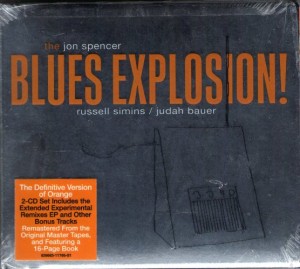
Now, on their third album, “Orange,” their interpretation of rhythm, more human-powered hip-hop than ever before, is evident.
“Yeah, I think ‘Orange’ is more of a hip-hop, rap record. ‘Extra Width’ was Stax. The Meters and James Brown were big, but ‘Orange’ took it even further. It was more refined, but also more James Brown, more Stax. Isaac Hayes, for example. And then on top of that, of course, there was rap music. It was a big influence.”
Please tell us about your encounter with the theremin, the instrument featured on the cover of “Orange,” and why you were fascinated by it.
“I started listening to the Theremin when the band first started. It was right at the beginning of the Blues Explosion. I’d never seen a theremin before, but I knew someone who owned one, so I asked, ‘Can I use it?’ I asked if I could borrow it. I wanted to use the theremin because it’s such a weird instrument. So bizarre and unusual. And at the time, I was looking for something that would take the music, the blues explosion, to an even more extreme place. Something even weirder, even crazier.”
At the time, you seemed to resonate with artists like the Beastie Boys and Beck. What specifically do you think was the mood or attitude you shared with them?
“Well… I guess we probably shared some of the same influences. We shared some of the same tastes in music. Plus… it was like an approach to music. It was kind of open-ended, like being influenced by anything. Any style of music is fine as long as you use it in the right way.”
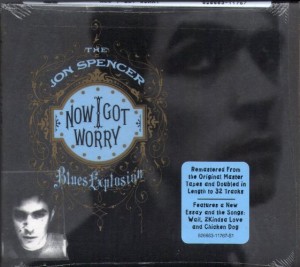
And your fourth album, “Now I Got Worry,” has a title. Do you think it has something to do with the memory of the car accident you and your wife were in at the time? If not, where does the anxiety and fear inside you that the title suggests come from?
“Of course, I think it has a little bit to do with it (laughs). Yeah, but at the same time, it’s just getting older and… I’ve become more aware of things, especially myself, who I am.”
So, do you have any corrections or additions to the theory that “Now I Got Worry” is the work that most reflects Jon Spencer’s inner self?
“No, there are definitely some songs on that album that are more introspective. I agree with that. Also, after ‘Orange,’ expectations were high for the Blues Explosion, because ‘Orange’ was our biggest hit on Big Success. So a lot of people were waiting to see what we would do next. Yeah, I think at that point, no matter what we did, people were going to be disappointed in some way. And ‘Now I Got Worry’ was a very raw, dirty, vulgar record. It was quite angry at times. So… it was difficult (laughs). It wasn’t easy listening music, like easygoing party music.
There wasn’t.”
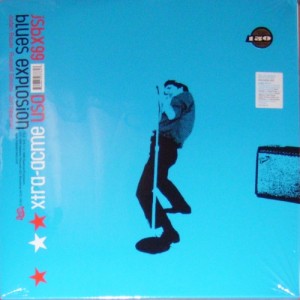
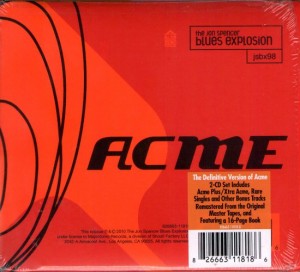
So, when you were working on your next 5th album, “Acme”, what were your expectations of the many producers and remixers?
“I just had expectations… not that much, but I just wanted to give it a go. I wanted to open myself up and give different producers, engineers, DJs… a lot of freedom with the material. Yeah, I was hoping they’d come up with something that would surprise me.”
So, what can you say about them, and why did you collaborate with them? First, Steve Albini.
“He’s a genius (laughs). He’s an incredibly talented recording engineer. On top of that, he’s someone I’ve always admired and respected. Not only does he have technical knowledge and experience, but his ideas and personality are incredible, and I like him as a musician too. I think he influenced me not just musically, but also in terms of his ideas. He said, ‘It’s okay to do whatever you want.’ Yeah, it’s a punk rock aesthetic. ‘Do something that’s uniquely yours.’”
So what about Dan Nakamura?
“He’s incredibly talented and clever as a producer, so maybe that’s why.”
Alec Empire.
“Well… he’s a sweetheart (lol)”
Moby.
“Just one word: I’m so rich now (laughs).”
David Holmes?
“He’s a really nice guy. It’s fun to work with him, and he did some stuff for the Blues Explosion, and I did some stuff on his records. We just get on well together and it’s fun.”
The East Village scene in New York that you admired as a teenager had already died out by the mid-80s. What was the biggest inspiration you received from that wasteland?
“The wasteland of today? Or the ’80s?”
It’s the 80’s.
“No, because what first attracted me to New York City was the art scene and music in the East Village in the early ’80s and around that time. It was a very dangerous place, with all sorts of extreme art forms, extreme music forms. More than anything, that motivated me to want to go to New York and be a part of it.”
However, since Giuliani became Mayor, New York has
It was remodeled. What did the city gain and lose as a result? “Well, of course… New York has become a tougher place for artists now. It’s a tough place to live and work, not just for musicians but for artists of all kinds. The rent is so high. But on the other hand, it’s safer, and there are nice shops and restaurants everywhere. But New York City is losing, or has already lost, what made it special. I’m just disappointed with New York City now. It’s full of McDonald’s and Starbucks, just like the rest of America, the rest of the world. What made it special is gone, for the most part.”
But now…
“Yes, things have really changed now. The city has been attacked and people are scared of more attacks.
Yeah, it’s a crazy time right now. I think we’ve entered a whole new era. We’ll just have to see what happens.”
So, what are your impressions of The Strokes, the first rock and roll band to come out of New York in a long time?
“Well, I wouldn’t say I’m much of a fan. I’ve seen them play a few times, but it’s just not my style. But… I wish them the best of luck, of course (laughs).”
So, if I were to roughly describe my impression after listening to the new album only once, it would be “a collection of up-tempo, authentic rock ‘n’ roll with a clear production that is completely free of garage influences.” Could you please correct and add to this impression in your own way?
“Wow, that’s enough for me and sounds really impressive, so my only response to that is ‘Thank you very much’ (laughs).”
Compared to your previous work, what do you think is the main focus of the new work as a whole?
“This record… well, for me it was a chance to do a different kind of music. A lot of the songs are more personal, so I think a lot of them are quite dark. I’m very angry. (Laughs) I think it’s a very heavy and difficult record. So the focus is on anger and loss and sadness.”
You once said that as a teenager you felt unhappy and full of hatred.
“Well, I guess I can still say that now (laughs). I still… well, I have to think about it a bit to know, but yeah, there are times when I’m unhappy, and I still harbor a lot of anger and hatred. That’s just me.”
Can you tell me what that reason is?
“Of course there are a few, but I don’t want to bore the readers of Snoozer (laughs). But… I think it’s a feeling that everyone has to live with. It’s an emotion that everyone experiences.”
So, has your motivation for expression changed? For example, even if your motivation was the emotion of anger, do you think there was any change in the object of that anger?
“Well… of course some things have changed, but some things don’t change over time. Especially when it comes to… anger at myself. Self-loathing, disappointment in myself. It’s constant, for me, maybe it’s always been there and it still is, even at this stage, at this age. But I know it better now, I can pinpoint it more accurately, I can identify with it more. But maybe it’s something I’ve always carried with me, lived with. I just wasn’t as aware before of what was really behind it, what was driving it. Yeah, that’s how I feel now… I guess.”
Three people with lost memories of their youth choose “Jon Spencer’s four best works”
I heard Pussy Galore’s 1987 debut album, “Right Now,” around the same time as Sonic Youth’s “Sister.” I was blown away by their glamorous junk sound (71), which sounded like a 100 times worse New York Dolls sound. Listening to it now, the JSBX elements are even more noticeable than I’d expected. Their third album, “Orange,” was an eye-opener. “I especially like Fully Grown. The video for “Flavor” ends with a brief appearance of Public Enemy’s Flavor Flav, which is a pun! The MUTE 12″ for “Heavy” includes the incredibly cool “2 Kinds a Love (Duck Rock’s 105.9 FM Final Mix),” which was accidentally not included on the American CD (71). As a DJ, I often used this album, mixing it with Moby’s Body Rock. The scream-inducing “Skank” and the adrenaline-pumping “Now I Got Worry” are number one in both perfection and energy. There are also many other dynamite-level tracks on this album. Even at the Shinjuku Rolling Stone where I was a DJ at the time, there wasn’t a day that went by without this album on the turntable.”
Considering the thoroughly destructive, intellectual gangster vibe of the Gallois era, Blues Explosion’s first album sounded like something straight out of a garage and honestly wasn’t satisfying (“It was a regression,” a friend said). So I passed up on their second album, which became the prototype for their current style, when it was released, but when I heard “Orange,” or rather “Bellbottoms,” I was so shocked I thought it was a different band. The sound, full of cool, unconventional energy, with a rube-filled groove centered around Russell’s drumming, which fully absorbed The Meters, New Orleans funk, and hip-hop, and John’s overwhelming persuasiveness, born from his thorough overuse of clichés, made me feel like a physicality was being resurrected in rock, something that had seemed almost impossible. I think Jon Spencer is a very intellectual person, compared to the ultra-sensory type like Calvin Johnson, with whom he has performed, and their sound is thoroughly solid, exactly what you’d call a live band of the post-hip-hop generation, but all three of them have a style that seems completely silly, and their greatest appeal is that on the surface there is no hint of artificiality at all.
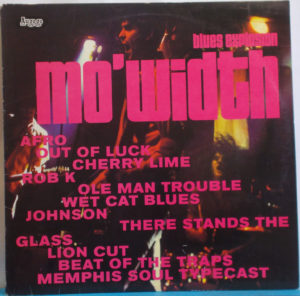
The fact that “Orange” tops the list is more out of inevitability than preference. Starting with “Bell Bottoms,” undoubtedly one of the most iconic songs of ’90s rock, this album is a treasure trove of speed and eroticism that leaves no time for breath. It was the winter of my 18th year, when I fell in love at first sight with John on the inside cover and encountered my first ever sex icon. Public opinion of “Extra Width” is still lukewarm, but I adore it. Compared to their releases after “Orange,” it’s less cathartic, but its relaxed feel is comfortable, old-fashioned, bluesy, and avant-garde. It also includes “Afro,” which our editor-in-chief declared, “This is definitely the best JSBX album.” “Mo’ Width,” produced right in between those two albums, is a masterpiece. While only available in Australia, it’s a masterpiece that fully captures the scorching heat of JSBX leading up to their explosive “Orange” release. Finally, “LA HISTORIA DE LA MUSICA ROCK” is the most expensive record I’ve ever bought. I remember paying 40,000 yen for it at a used record store in Shinjuku. I forced myself to include it in my collection to commemorate “one of the top five stupidest purchases of my life.”